Leitfaden zur Beschaffung von Verdunstungsluftkühlern: 4 versteckte Qualitätsrisiken, die B2B-Einkäufer vermeiden sollten

Da die weltweiten Sommertemperaturen weiterhin Rekorde brechen, steigt die Nachfrage [...]
Da die weltweiten Sommertemperaturen weiterhin Rekorde brechen, ist die Nachfrage nach energieeffizienten Kühllösungen sprunghaft angestiegen. Für B2B-Einkäufer, Importeure von Haushaltsgeräten und Supermarktketten ist der Großeinkauf Verdunstungsluftkühler ist eine äußerst lukrative saisonale Investition.
Der B2B-Markt für Geräte ist jedoch von Preiskämpfen geprägt, was viele Hersteller im Niedrigpreissegment dazu veranlasst, an der Qualität zu sparen. Ein niedrigerer Anschaffungspreis pro Einheit führt oft zu katastrophal hohen Rücklaufquoten, kostspieligen Rückrufaktionen und einem Imageschaden für die Marke.
Um Ihre geschäftliche Investition zu schützen, finden Sie hier einen Insider-Leitfaden zur Beschaffung, der die vier entscheidenden Komponenten eines Verdunstungskühlers behandelt – und erklärt, wie Sie sicherstellen können, dass Sie ein Produkt in gewerblicher Qualität erwerben.
1. Der Motor: Reines Kupfer vs. kupferbeschichtetes Aluminium (CCA)
Der Motor ist das Herzstück eines Luftkühlers. Er bestimmt die Lebensdauer, die Windgeschwindigkeit und vor allem die Sicherheit des Geräts.
Das verborgene Risiko:
Um Kosten zu senken, greifen viele Hersteller im Niedrigpreissegment auf Kupferummanteltes Aluminium (CCA) Drahtmotoren. Aluminium weist einen höheren elektrischen Widerstand auf als Kupfer, was dazu führt, dass sich der Motor bei dauerhafter Belastung im Sommer schnell überhitzt. CCA-Motoren verschleißen schnell, was innerhalb einer einzigen Saison zu plötzlichen Ausfällen des Ventilators oder zum Durchbrennen der Anschlüsse führen kann.
Der berufliche Standard:
Bestehen Sie stets darauf, 100%-Motoren mit Wicklungen aus reinem Kupferdraht. Reines Kupfer bietet eine hervorragende elektrische Leitfähigkeit, einen geringeren Energieverbrauch, geringere Betriebsgeräusche und eine deutlich längere Lebensdauer.
Die ultimative Sicherheitsmaßnahme: Mechanische Überhitzungsschutzvorrichtungen
Ein Premium-Hersteller geht bei der Motorsicherheit noch einen Schritt weiter, indem er physikalisch fundierte Sicherheitsvorkehrungen in mehreren Ebenen einbaut. Hochwertige Motoren müssen über eine integrierte integrierter mechanischer Thermoschutz (thermischer Überlastschutz) tief in den Statorwicklungen eingebettet.
So funktioniert es: Wenn die Lüfterflügel versehentlich durch Fremdkörper blockiert werden (Locked-Rotor) oder bei extremer Umgebungswärme ununterbrochen laufen, steigt die Innentemperatur des Motors stark an. Sobald sie einen kritischen Schwellenwert erreicht (in der Regel 130 °C bis 135 °C), springt der im Inneren dieses mechanischen Bauteils befindliche Bimetallstreifen aufgrund der Wärmeausdehnung physikalisch auf, die Stromversorgung sofort unterbrechen bevor eine Rauch- oder Brandgefahr entstehen kann. Sobald der Motor wieder auf einen sicheren Temperaturbereich abgekühlt ist, wird der mechanische Schutzschalter automatisch zurückgesetzt und die Funktion wiederhergestellt.
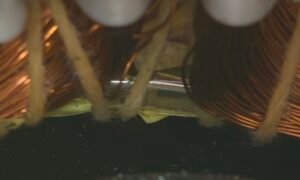
Die ultimative Sicherheitsgrundlage unter der Lupe: Eine Makroaufnahme des integrierten metallischen mechanischen Überhitzungsschutzes, der in den Spulen verbaut ist. Diese entscheidende Komponente unterbricht die Stromzufuhr sofort, sobald die interne Wärme sichere Grenzwerte überschreitet, und schützt Ihre Marke so vor kostspieligen Haftungsansprüchen aufgrund von Produktfehlern.
So können B2B-Einkäufer die Angaben überprüfen:
- Sehen Sie sich die technischen Datenblätter an: Prüfen Sie die eingehenden Unterlagen auf ausdrücklich angegebene Materialien für Motorwicklungen und vergewissern Sie sich, dass Begriffe wie “Inklusive Wärmeschutz” neben standardisierten Isolationsklassen (z. B. Klasse B oder Klasse F).
- Fordern Sie einen Testbericht zur werkseitigen Rotorsperre an: Fordern Sie den Hersteller auf, Labordaten offenzulegen. Ein billiger, minderwertiger Motor beginnt innerhalb weniger Minuten zu rauchen und brennt durch, wenn er mechanisch blockiert wird; bei einem professionellen Motor wird hingegen der Thermoschalter sicher ausgelöst, sodass die Motorstruktur nach dem Abkühlen vollständig intakt bleibt.
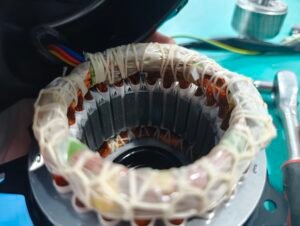
Ein Einblick in unsere anspruchsvolle Fertigung: Jeder Woside-Lüftermotor verfügt über eine saubere Wicklung aus reinem Kupferdraht der Sorte 100% mit hoher Dichte, die auf minimale Leistungsverluste und maximale thermische Lebensdauer ausgelegt ist.
2. Das Gehäuse: 100%-Neuplastik vs. Recyclingmaterial
Das Außengehäuse schützt die inneren elektrischen Komponenten und prägt den ersten ästhetischen Eindruck, den der Verbraucher im Verkaufsregal von Ihrer Marke gewinnt.
Das verborgene Risiko:
Preisgünstige Luftkühler nutzen häufig recyceltes Kunststoffgranulat. Recycelter Kunststoff verströmt einen deutlichen, stechenden chemischen Geruch, wenn der Lüfter warme Luft durch das Gehäuse bläst – ein Hauptgrund für sofortige Rückgaben von Verbraucherprodukten. Darüber hinaus weist recyceltes Granulat eine äußerst schlechte UV-Beständigkeit und eine spröde strukturelle Integrität auf. Bei Sonneneinstrahlung im Sommer kann das Gehäuse schnell ausbleichen, sich verziehen, Risse bekommen oder während des Transports auf See und der Palettenverteilung im Inland zerbrechen.
Der berufliche Standard:
Hochwertige Luftkühler verwenden ausschließlich 100% Technische Kunststoffe aus reinem ABS oder PP (Polypropylen). Das Virgin-Material ist strukturell belastbar, äußerst schlagfest, völlig geruchsneutral und behält auch nach jahrelanger Witterungseinwirkung seine glatte, hochwertige Hochglanzoberfläche sowie seine Farbechtheit bei.
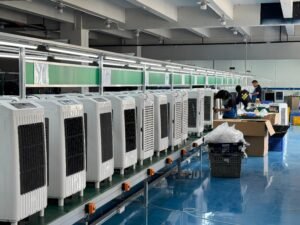
Die Verwendung von 100%-Technikkunststoffen aus reinem ABS/PP gewährleistet ein völlig geruchloses Verbrauchererlebnis, eine lebendige Farbechtheit und eine hohe Schlagfestigkeit der Konstruktion während des Transports.
3. Das Wasserversorgungssystem: Leckagetechnik und Schutz vor Trockenlauf
Verdunstungsluftkühler sind vollständig auf eine kontinuierliche Wasserzirkulation angewiesen. Eine schlecht konzipierte Strömungsdynamik ist für Importeure aus Übersee ein absoluter Albtraum.
Das verborgene Risiko
Wasser, das aus minderwertigen Kunststoffnähten, schwachen Schweißnähten oder lockeren Ablassstopfen austritt, kann die Hartholzböden im Wohnbereich des Endverbrauchers schnell zerstören und teure Haftpflichtansprüche gegen Ihre Einzelhandelsmarke nach sich ziehen. Sollten Verbraucher zudem vergessen, den Wassertank nachzufüllen, laufen herkömmliche, kostengünstige Wasserpumpen im Trockenlauf weiter und brennen die Pumpenbaugruppe innerhalb weniger Stunden vollständig durch.
Der berufliche Standard
Arbeiten Sie mit Herstellern zusammen, die eine zweigleisige technische Methodik für die Flüssigkeitsrückhaltung anwenden:
-
Einteilige, im Spritzgussverfahren hergestellte Wassertanks: Durch die Beseitigung von strukturellen Fugen unterhalb der Wasserlinie wird die physikalische Wahrscheinlichkeit von Undichtigkeiten minimiert.
-
Automatische Abschaltung / Schutz durch Trockenlaufsensor: Das System muss über einen integrierten Schwimmer oder Sensor zur Wasserstandsmessung verfügen. Sobald der Wasserstand unter die sichere Mindestmarke fällt, schaltet das System automatisch die Stromversorgung der Wasserpumpe ab, lässt den Lüfter jedoch weiterlaufen, um die Pumpe vor einem Ausfall durch Trockenlauf zu schützen.
4. Das Kühlpad: Wabenstruktur mit hoher Dichte vs. minderwertiges Papier
Das Kühlpad (Verdunstungsmedium) bestimmt direkt, welchen tatsächlichen Temperaturabfall das Gerät erzielen kann.
Das verborgene Risiko
Kostengünstige Kühlmedien bestehen aus dünnem, locker gewebtem Papier, das mit billigen industriellen Formaldehydklebern zusammengehalten wird. Wenn sie nass werden, verströmen sie gefährliche chemische Gerüche und zerfallen bzw. hängen innerhalb weniger Monate durch. Aufgrund ihrer geringen Wasseraufnahmefähigkeit fühlt sich der herausströmende Wind eher feucht und schwül als erfrischend an.
Der berufliche Standard
Entscheiden Sie sich für dickes, Wabenkühlkörper mit hoher Dichte (z. B. der Bauarten 5090 oder 7090). Diese Pads zeichnen sich durch eine dicke, kreuzgewellte Struktur aus, die die Kontaktfläche zwischen der strömenden Luft und dem zirkulierenden Wasser maximiert und so eine außergewöhnliche Kühlleistung gewährleistet. Da sie mit umweltfreundlichen, geruchsneutralen Harzen gebunden sind, behalten sie auch nach jahrelangen Befeuchtungs- und Trocknungszyklen ihre strukturelle Stabilität und sind schimmelresistent.
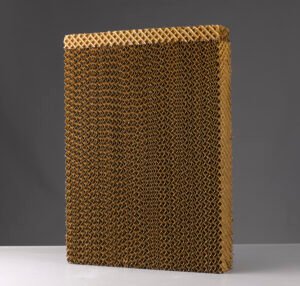
Entwickelt für maximale Temperaturabsenkung: Eine Nahaufnahme unseres hochwertigen, dicken 5090-Wabenkühlkörpers. Diese spezielle Struktur mit hoher Dichte optimiert die Verdunstungseffizienz von Wasser in Luft, was zu einem schnellen, spürbaren Temperaturrückgang führt, während das Produkt gleichzeitig völlig geruchsneutral und schimmelresistent bleibt.
Fazit: Arbeiten Sie mit einem Hersteller zusammen, der technisches Know-how über Preissenkungen stellt
Auf dem hart umkämpften Markt für Haushaltsgeräte kann das Sparen von ein paar Dollar durch einen günstigeren Stückpreis Sie Zehntausende Dollar für die Behebung geschäftlicher Schäden kosten. Die Zusammenarbeit mit einem Hersteller, der über eigene Formen verfügt, seine Rohstofflieferkette kontrolliert und strenge Qualitätskontrollprotokolle (QC) umsetzt, ist der einzige Weg, eine nachhaltige und rentable Produktlinie aufzubauen.
Bei WOSIDE, unterstützt von Über 27 Jahre Erfahrung in der Herstellung hochwertiger Produkte, … halten wir uns strikt an die höchsten B2B-Produktionsstandards. Wir führen strenge 100%-Prüfungen für neue Materialien durch, und unsere hauseigenen Entwicklungsteams unterstützen eine umfassende OEM/ODM-Anpassung (individuelle Logos, maßgeschneiderte Formen und Verpackungsdesign). Jedes eingehende Motorkomponenten wird von unserem IQC-Team (Incoming Quality Control) doppelt überprüft und geprüft, um vor der Serienmontage die Einhaltung höchster Sicherheitsstandards zu gewährleisten.
Sichern Sie sich Ihren Sommerbestand mit Zuversicht
Planen Sie gerade die Einführung Ihrer nächsten saisonalen Produkte oder möchten Sie Ihre aktuelle Lieferkette für Haushaltsgeräte überprüfen?
[Nehmen Sie noch heute Kontakt mit dem Expertenteam von WOSIDE auf] um ein Angebot direkt vom Hersteller, einen umfassenden Produktkatalog anzufordern oder eine sofortige Lieferung von OEM-/ODM-Mustern zu vereinbaren. Wir unterstützen Sie gerne dabei, eine wettbewerbsfähige und äußerst zuverlässige Geräteserie aufzubauen, der Ihr Markt vertraut.
Diesen Artikel teilen

Verfasst von: Jamie Chen
Inhalt des Beitrags
Folgen Sie uns
Neueste Artikel
Oktober 12, 2026
Oktober 12, 2026