5L Tower Air Cooler for South Africa: Retail Positioning in Dry Inland Markets

South Africa is not a single cooling market. A 5L [...]
South Africa is not a single cooling market. A 5L tower air cooler for South Africa should be positioned by regional climate, room type and retail channel—not sold with a blanket promise of air-conditioner performance. The compact format is strongest as a point-of-use airflow and evaporative-comfort product for drier inland locations, ventilated rooms and customers who value a slim footprint.
Il South African Government’s climate overview describes the country as relatively dry, with average annual rainfall of about 464mm, while also noting major differences between regions and coastlines. That supports a regional sales plan rather than one national claim.
Start with Climate, Not the Tank Size
Evaporative cooling works best when warm air passes through a wet cooling medium and the added moisture can leave the space. Drier air can accept more moisture; high humidity reduces the evaporation effect. Ventilation is therefore part of the product requirement, not a minor usage tip.
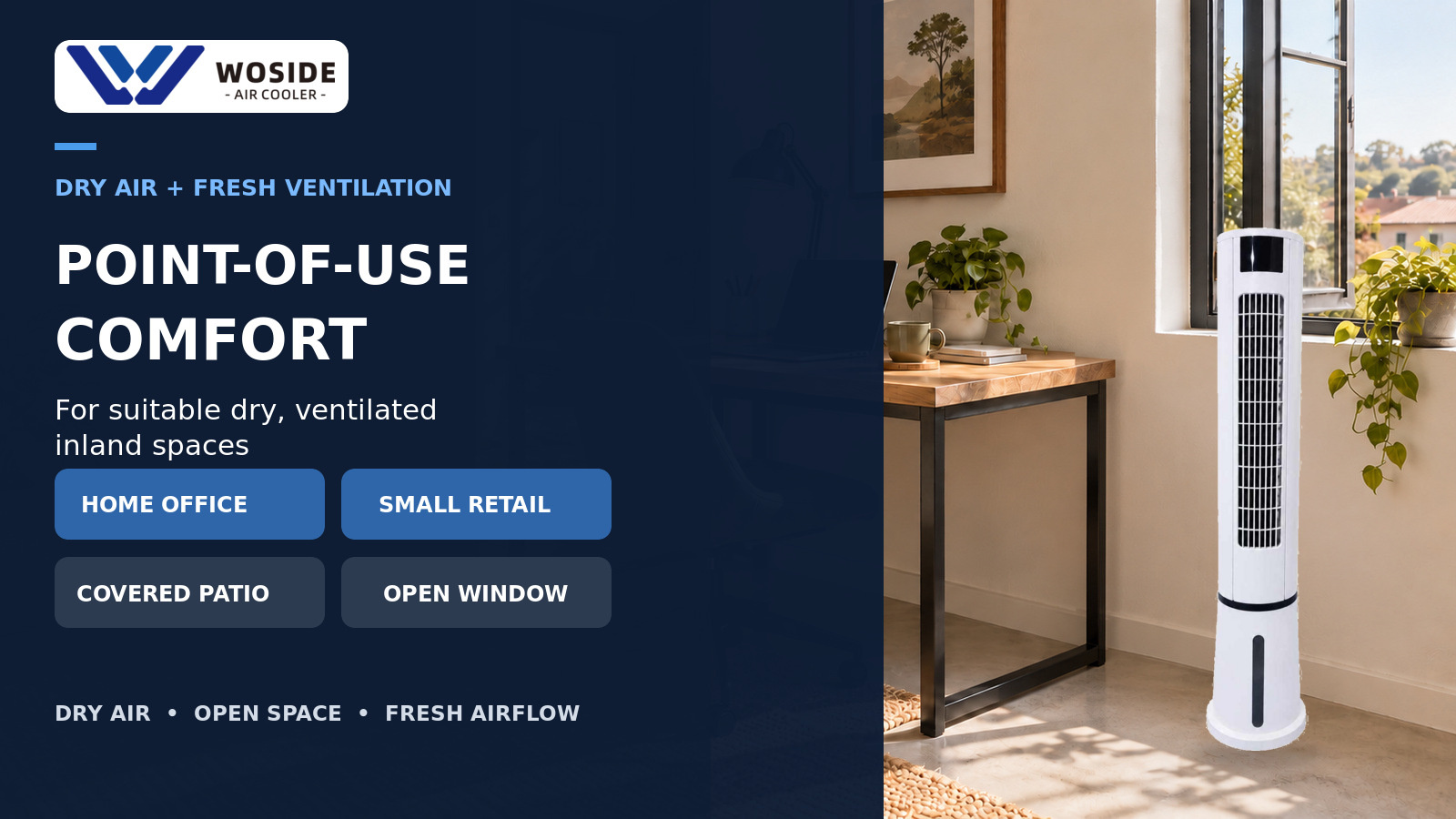
For inland retailers, reasonable applications include ventilated bedrooms, home offices, reception areas, small shops and covered patios. Humid coastal rooms, sealed spaces and customers expecting compressor-level temperature control are weaker targets. The product should be presented as a compact evaporative air cooler, not as a portable refrigerated air conditioner.
This distinction also helps buyers evaluating a water cooled tower fan South Africa program. The real value is the combination of directed airflow, water-assisted comfort and a narrow tower body—not a promise to cool every room equally.
Why the 5L Tower Format Works at Retail
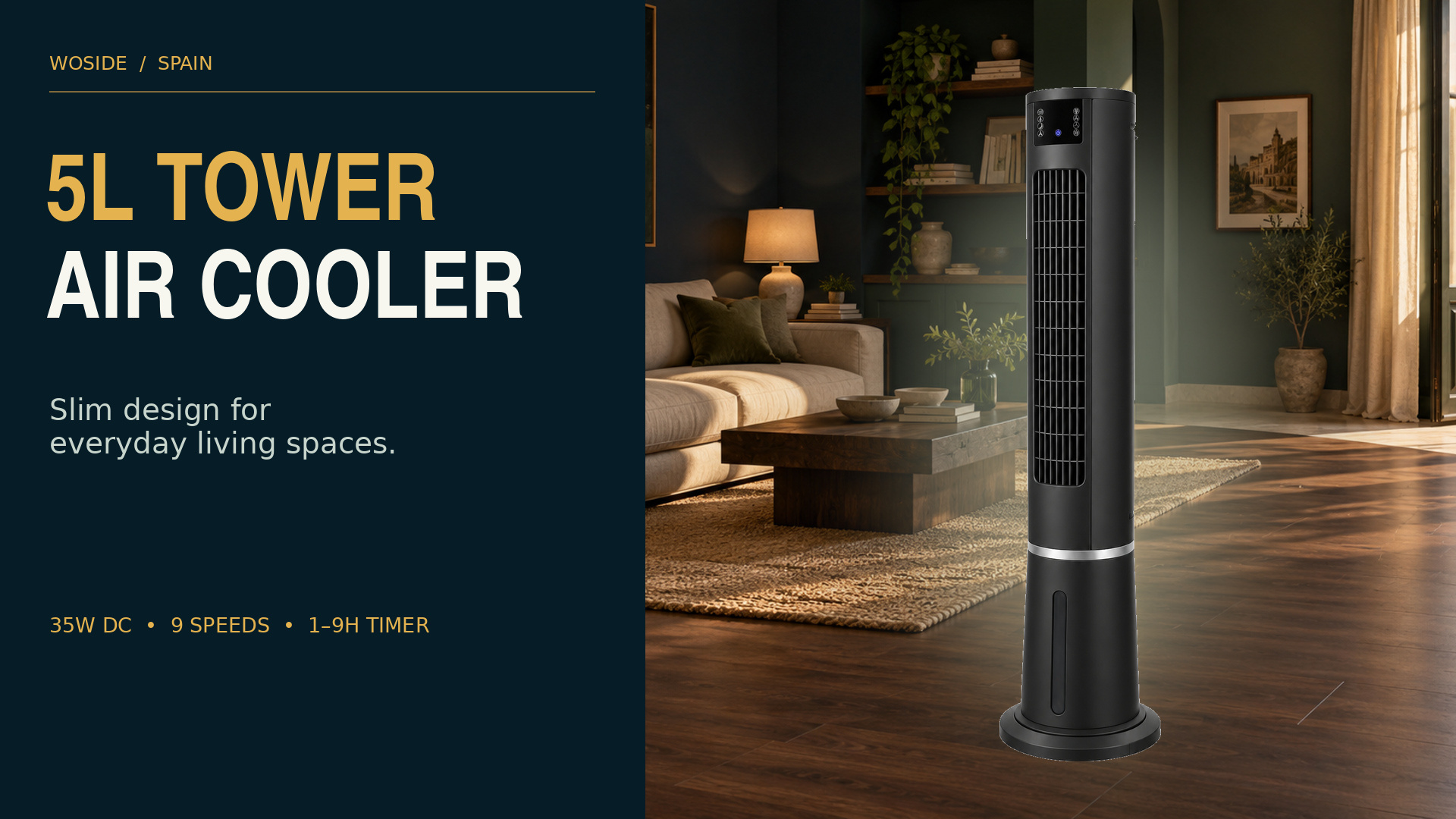
According to the WOSIDE WSD-TAF25L product page, the model uses a 5L tank, 60W rated power and an AC220–240V, 50/60Hz configuration. Its body measures 272 × 272 × 1010mm and includes top touch controls with an infrared remote.
Those specifications create a different shelf position from larger wheeled coolers. The slim base uses limited floor space, while the tall front outlet makes the product easy to demonstrate without a complex installation. The 5L tank keeps the body compact, although sales staff should explain that refill frequency depends on operating conditions. Capacity is a convenience specification, not a measure of cooling power.
For appliance stores, home-improvement channels and e-commerce sellers, the model can act as a private label tower fan upgrade: visually familiar, but differentiated by its water-cooling function. A short demonstration can show airflow, controls, water filling and the difference between fan-only and cooling operation.
What Should a South African RFQ Confirm?
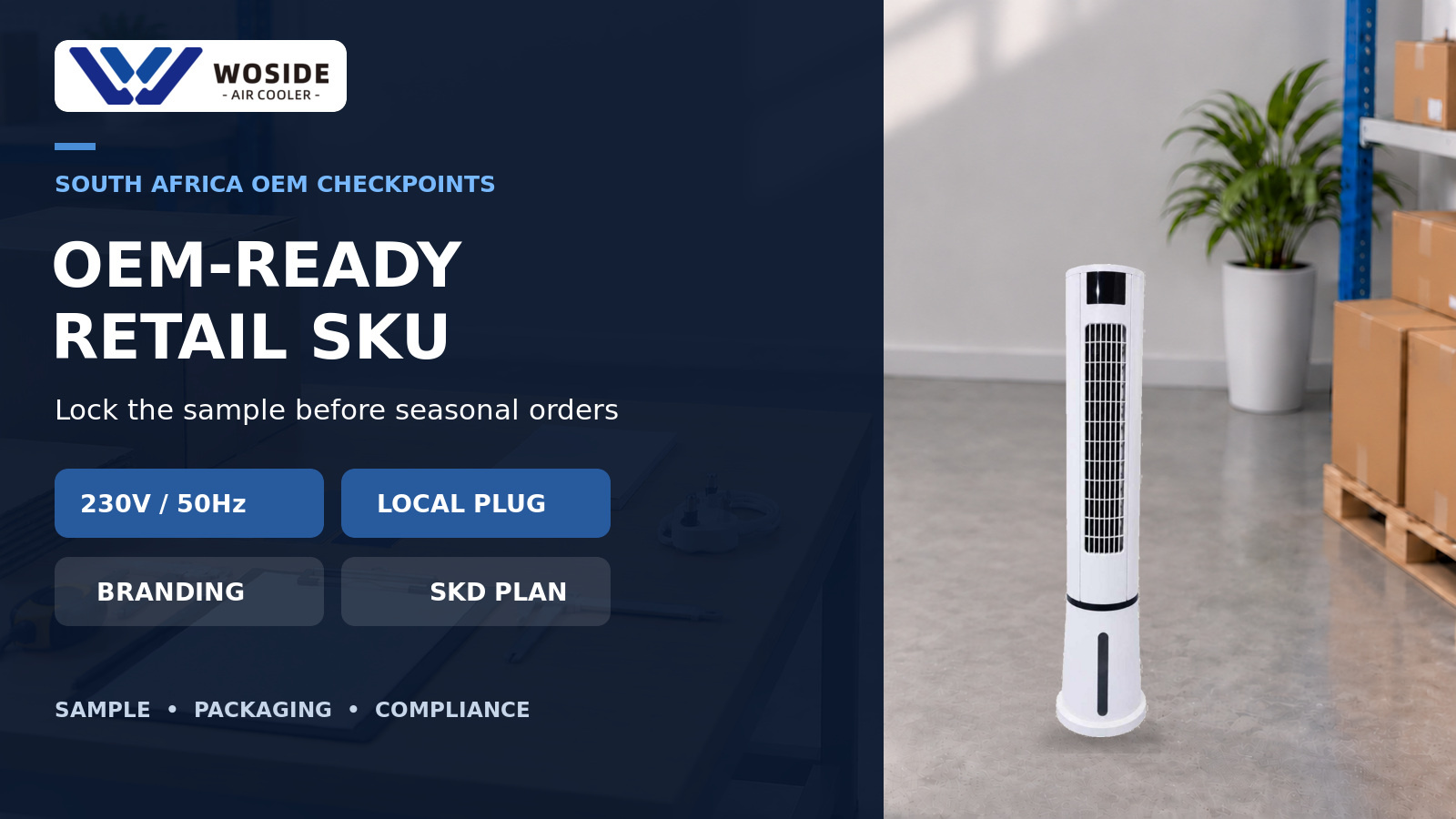
South African Tourism’s market information lists local electricity at 220/230V AC and 50Hz. A 230V 50Hz tower air cooler OEM request still needs a confirmed local plug, cord, label and compliance plan. Voltage compatibility alone does not mean the finished product is automatically ready for sale.
Before ordering, importers should confirm:
- control-panel icons, remote functions and English manual wording;
- pump operation, water distribution, tank sealing and water-level visibility;
- rear cooling-medium and filter access for cleaning;
- airflow, oscillation, noise and stability on the approved sample;
- logo position, color-box artwork, carton marks and spare-part support;
- assembled or SKD loading method and protection for the tall body.
WOSIDE lists approximately 1,200 assembled units or up to 1,400 SKD units per 40HQ. A buyer comparing a tower air cooler supplier should verify the final packing method, loading quantity and assembly responsibility before using those numbers in a landed-cost calculation.
Build a Regional Claim That Retailers Can Defend
The strongest message for an air cooler distributor South Africa is simple: slim, water-assisted airflow for suitable dry and ventilated locations. It is more credible than calling the product a universal room cooler, and it gives retail staff a claim they can demonstrate.
The next step is to test a correctly configured WSD-TAF25L sample in a representative inland environment, then finalize the plug, compliance documents, branding, packaging and after-sales parts before seasonal production. That turns a compact appliance into a defined retail program instead of another generic fan SKU.
Condividi questo articolo

Scritto da: Jamie Chen
contenuto del post
Seguiteci
Articoli più recenti
Ottobre 5, 2026
Ottobre 5, 2026